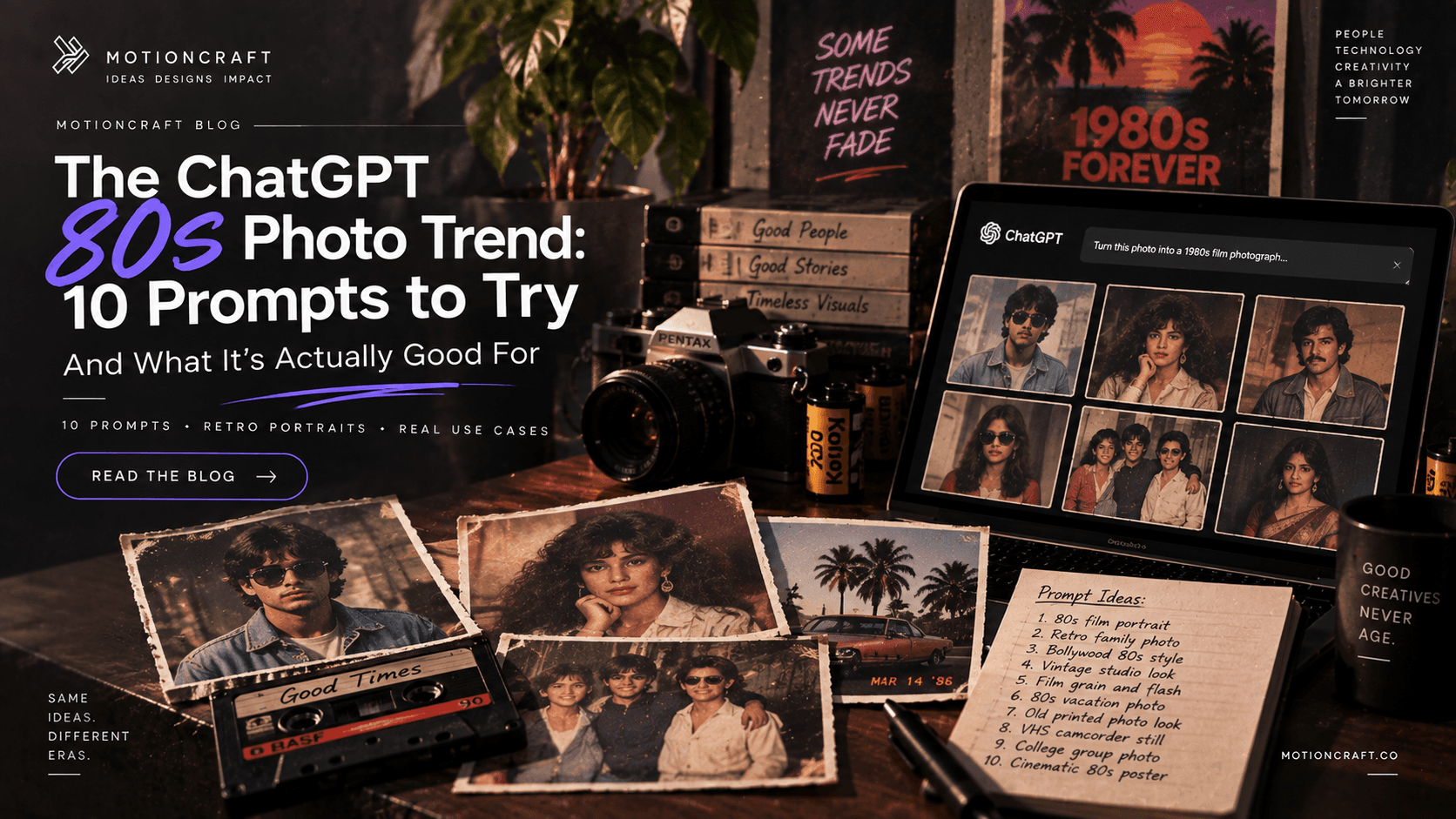
Short version: the current AI-image trend takes a normal photo and restyles it as an 80s-era portrait — big hair, saturated color, neon or laser backdrops, soft glamour glow, VHS-era grain. It works in ChatGPT with an image-generation-capable model (GPT-4o or newer): upload a clear photo, paste one of the prompts below, and iterate. Below are ten to start from, plus what actually makes this trend work and where it fits if you're using it for a brand rather than just yourself.
What makes an 80s-style prompt actually work
The generic version of this — "make my photo look 80s" — produces something vaguely nostalgic and not much else. The prompts that actually land are specific about the texture of the decade, not just the vibe:
- Big, voluminous hair — named explicitly, not implied
- Saturated, slightly oversaturated color, not a modern muted palette
- A period backdrop: mall photo studio, laser grid, gradient sunset, arcade
- Soft-focus glamour lighting or VHS/film-grain texture — pick one, not both, or it gets muddy
- Period-accurate clothing details — shoulder pads, denim jackets, specific accessories — rather than "80s clothes"
A clear, front-facing photo works best for portrait and glamour styles. A half- or full-body shot gives the model more to restyle for outfit and pose.
10 prompts to start with
Mall glamour portrait — "Restyle this photo as a 1980s mall photo studio glamour portrait: soft-focus lighting, laser-grid or gradient sunset backdrop, big voluminous hair, bold blush and eyeshadow, warm film grain."
Corporate power dressing — "Reimagine this photo as an 80s corporate portrait: structured blazer with dramatic shoulder pads, bold red lipstick, confident pose, plain studio backdrop, crisp studio lighting."
VHS camcorder still — "Turn this into a still frame from an 80s home VHS camcorder recording: slight motion blur, timestamp overlay in the corner, warm color cast, visible scan lines and grain."
Synthwave neon — "Restyle this as a synthwave-inspired 80s portrait: magenta and cyan neon lighting, grid-line horizon in the background, glossy highlights, retro-futuristic mood."
Arcade hangout — "Place this person in an 80s video arcade: neon signage, cabinet machines in the background, denim jacket, candid excited expression, warm fluorescent lighting."
Record sleeve cover — "Design this as an 80s pop album cover: bold graphic typography treatment around the subject, high-contrast studio lighting, saturated single-color background, glossy print texture."
High school yearbook — "Restyle as a 1980s high school yearbook photo: plain blue-gradient studio backdrop, soft flash lighting, feathered hair, classic yearbook photo framing and slight film grain."
Aerobics studio — "Reimagine this as an 80s aerobics class photo: bright leotard and headband, dynamic action pose, mirrored studio wall in the background, punchy primary colors."
Action movie poster — "Turn this into an 80s action movie poster: dramatic low-angle hero pose, explosion or sunset in the background, bold tagline-style typography space, high contrast lighting."
Family sitcom still — "Restyle this as a still from an 80s family sitcom intro: warm soft lighting, patterned sweater or collared shirt, cozy living-room set in the background, slightly soft VHS-era color grade."
Start from these, then push further with your own detail — a specific color, a prop, a mood. The model responds well to one extra concrete detail more than it does to a longer description of the vibe.
If you're doing this for a brand, not just yourself
This is genuinely useful, low-cost social content — and also genuinely disposable. A few honest notes if you're a small business thinking about using it:
- It's a week of engagement, not a content strategy. Trend content spikes fast and fades faster. Fine as a one-off post, not something to plan a content calendar around.
- Caption it as AI-generated. Audiences are fine with playful AI content; being cagey about it is what erodes trust, not the AI use itself.
- Keep it recognizably you. The trend works because it's still identifiably the person or brand underneath the styling — don't let the effect swallow the thing you're actually trying to represent.
- It's a good instinct to have. Noticing a trend and asking "can we use this" is exactly the muscle that keeps a brand's social feed feeling alive instead of purely promotional — which is the harder, more valuable skill underneath the specific trend.
If you want help turning trend-awareness like this into an actual content rhythm — not just one-off posts — that's social media marketing and branding territory, and it's worth talking through what would actually fit your brand rather than chasing every trend that comes through.
See also: GPT-6 Astra and the AI 3D-model trend — the bigger story this month in the same AI-creative-tooling wave.